Coordinates are not sensation
A spatial mix can carry precise coordinates for a voice, wall reflection, and moving object. Those coordinates still travel through one driver on either side of the head.
Angle, distance, and the tiny volume of air between driver and ear change the arrival time enough to make a stable point feel smeared.
The seal is part of the model
A broken seal does more than remove bass. It changes the balance of direct and reflected energy the spatial model expects.
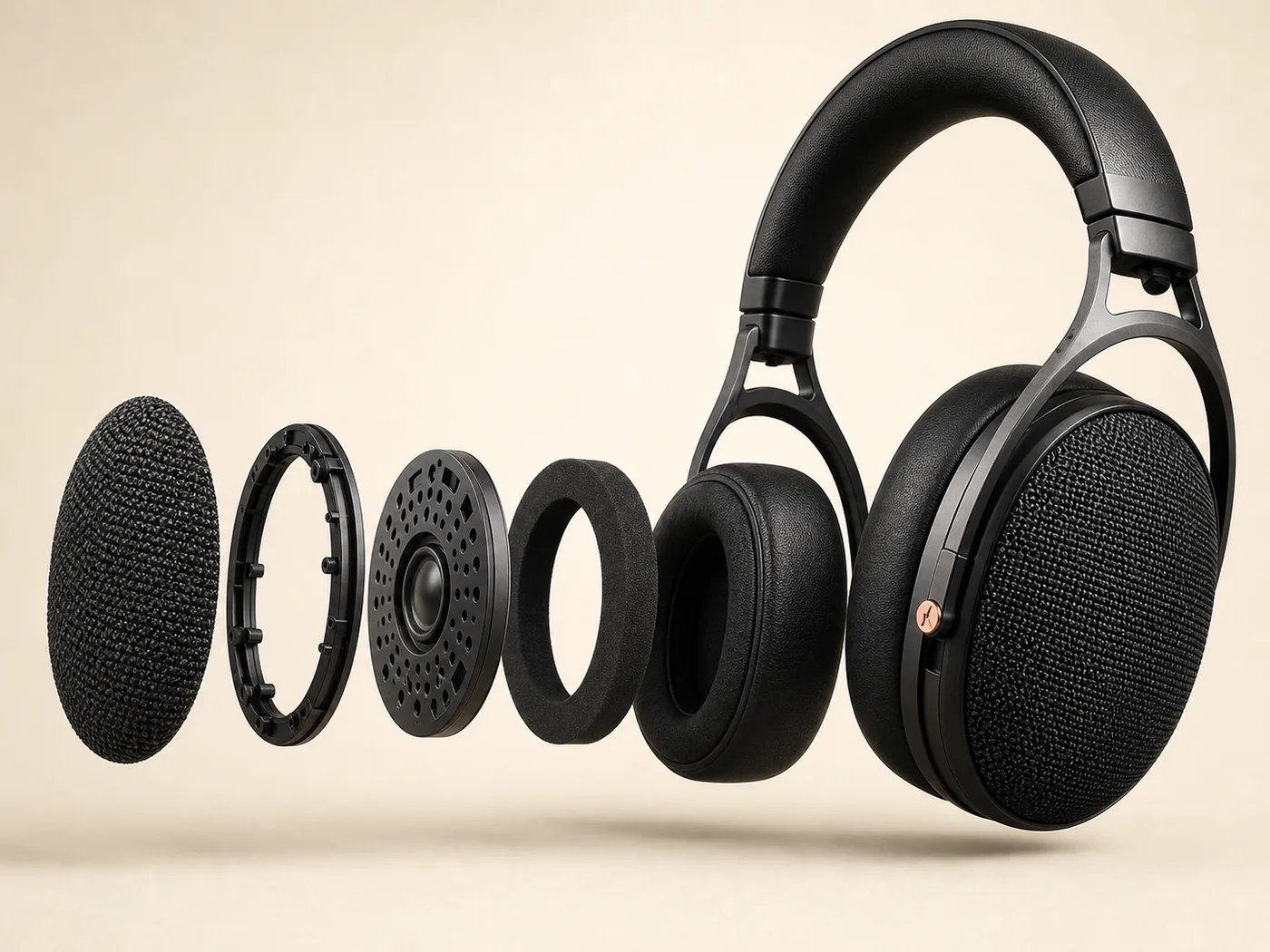
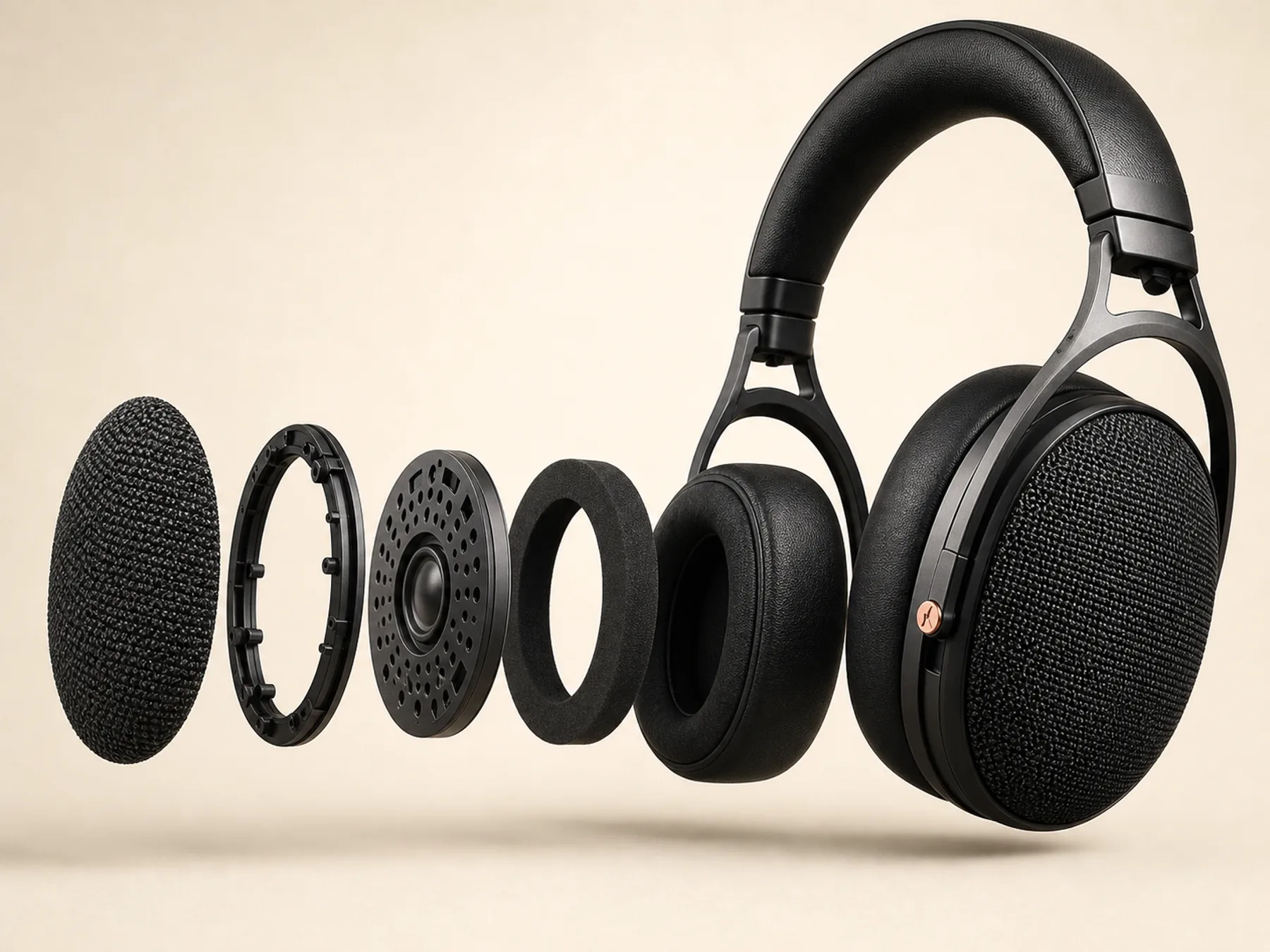
ORA uses a three-density cushion and a floating yoke so the acoustic volume remains consistent while the jaw moves.
The room model is only as trustworthy as the pressure around it.
Movement exposes latency
Head tracking feels natural when the anchored stage responds before the listener notices a correction. A late response makes the entire room appear attached to the headphones.
The sensor ring and rendering path are tuned together, because shaving latency from one side cannot rescue an unstable physical frame.